The Mahoning Valley Historical Society will be publishing all new blog content at the main website:
www.mahoninghistory.org
Come take a look!
Sunday, September 23, 2012

Friday, April 6, 2012
Titanic: Tragedy in the Headlines - a new exhibit at the Arms Family Museum

Titanic: Tragedy in the Headlines features coverage of the Titanic disaster by the Youngstown Telegram and the Youngstown Vindicator. Stories range from firsthand accounts of the crash’s immediate aftermath to speculation about what could have been done to avert the disaster to descriptions of recovering bodies from the collision site. The exhibit will be open through the month of April.
The Arms Family Museum is located at 648 Wick Avenue in Youngstown. Museum hours are Tuesday through Sunday from 1:00 to 5:00 p.m. Admission is $4 for adults, $3 for senior citizens and $2 for children. For more information please call 330-743-2589 or visit www.mahoninghistory.org
Wednesday, April 4, 2012
Burt's Confectionary Opened 90 Years Ago Today!

Harry B. Burt (1874-1926) came to Youngstown in 1893 and began making and selling penny candy. He expanded his business with high quality candies, chocolates and ice cream. Around 1920 Burt invented a process for freezing a wood stick in an ice cream bar and coating it in smooth chocolate so it could be made and eaten without being touched. He called his new confection “Good Humor Ice Cream Suckers. Burt purchased the building at 325 West Federal Street in 1921, and underwent an extensive remodeling project. The new Burt’s Confectionary opened to the public on April 4, 1922 amid great fanfare in the local daily newspaper The Youngstown Vindicator. The facility included a chocolate and hard candy factory, kitchen and bakery, banquet room, large dance hall, dining rooms, a retail store for his products and an ice cream factory. With the latter Burt could mass-produce Good Humor suckers and provide enough inventory for his new distribution method—selling ice cream on the streets in Youngstown-area neighborhoods from a fleet of freezer trucks with bell-ringing, white-uniform-clad drivers.
For the opening Burt published a souvenir booklet, a copy of which is in the archives collection. Portions of the booklet were reproduced in Historical Happenings from July of 2008 to February of 2009.
In 2008 the Mahoning Valley Historical Society purchased the building and is in the process of renovating it into the Tyler Mahoning Valley History Center. The new History Center will be designed to make as much of the Harry Burt/Ross Radio Building accessible to the public as is possible. In fact it will be a multi-purpose community center with a local history theme. The basement level will house the Historical Society’s archival library storage and public research rooms. The first floor will include gathering spaces, a museum store, and large and small exhibit galleries. The original second floor ballroom will be restored and available for Historical Society events, public rentals, and traveling exhibit installations. The third floor will include an education classroom, media room, multi-purpose exhibit and event gallery, office and meeting space.
Progress on renovations is 75% complete. Highlights of the project include the reinstallation of four skylights, restoration of the historic ballroom and preparations in the basement level for compact shelving.
See some photos of construction!
The Campaign for the Tyler Mahoning Valley History Center has raised $4.6 million of the $6 million goal.
3 Local Foundations donate $750K to project
For more information about the campaign
Tuesday, October 4, 2011
Clues: The Butler’s Belfry

The Arms Family Museum of Local History is the setting for 34west’s upcoming web series “Clues: The Butler’s Belfry” which will air online throughout October. The classic board game ‘Clue’ gets spoofed with death-defying banter and semipsychological goofiness. The museum functions as home to the eccentric philanthropist “Mr. Body.”
“We were absolutely thrilled to receive permission from The Mahoning Valley Historical Society to film at the museum,” says 34west Artistic Director Jeff Querin. “The home is an ideal location for Body Manor.”

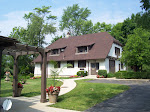
34west worked closely with the Curator of Education for the museum, Rebecca Whittenberger, in securing the location. Built in 1905 in the “Arts and Crafts” style, the home reflects many similarities to the fictional mansion in the story. “Olive Arms was one of the direct descendents of the founding families of Youngstown and was known to entertain from time to time,” says Whittenberger. “Unfortunately, there is no ‘real’ mystery surrounding Mrs. Arms.”
The web series, which is basically a television series made for the internet, will feature short scenes from 34west’s upcoming October mystery dinner theater at Das Dutch Village Inn, Columbiana. “Our live mystery series have always been popular with audiences,” says Querin. “They’re zany, interactive, and surprising. Streaming these online is a perfect fit.”

Featured in the cast are 34west company members Jeff Querin, Stephen Wayne, Maria Householder and Magdalyn Donnelly. Each actor plays multiple parts, which adds to the silliness of the “webisodes.” Querin adds, “It’s very similar to what you’d see on Mad TV or Saturday Night Live, where the same actor plays many roles.”
A new episode of “Clues: The Butler’s Belfry” will air at www.34west.org/films each week in October leading up to the live dinner theater performances in Columbiana, October 27, 28, 29, with a special matinee on October 27.
The live performances will take place in the elegant banquet center of Das Dutch Village Inn of Columbiana, 150 E. state Route 14. Seating for evening shows begins at 6:45 p.m, with a four-course meal beginning at 7 p.m. Seating for matinees begins at 11:45 p.m, with a four course meal at 12:00. Tickets are $40 ($35 matinee); discount given for groups of 8 or more. For
reservations and lodging information call 1-866-482-5050.
To visit the “real” Body Manor in person, The Arms Family Museum is open for tours Tuesday-Sunday. The Mahoning Valley Historical Society is opening a new building in September of 2012: the Tyler Mahoning Valley History Center. To learn more, become a fan on Facebook or visit www.mahoninghistory.org
Wednesday, May 25, 2011
Under Construction!
Construction on The Mahoning Valley History Center is underway! The following is a slideshow showing some of the work that is currently being done on the exterior stair and elevator towers, the front facade restoration and some interior projects.
Sunday, April 10, 2011
David Tod: Ohio's Civil War Governor

An excerpt taken from
Mahoning Memories
A History of Youngstown and Mahoning County
by Frederick J. Blue, William D. Jenkins, H. William Lawson, & Joan M. Reedy
In the mid to late 1800's David Tod was one of the most successful of a growing group of Youngstowners who combined business interests, such as the canal and railroad, with politics. He was the son of a prominent attorney, George Tod of Connecticut, who had come to Youngstown in 1800 with his wife Sarah and two children. David was born in 1805, was raised at the family's expansive farm at Brier Hill, and attended neighborhood schools and the Burton Academy in Geauga County before studying law and being admitted to the Ohio bar in 1827. He was married in 1832 to Maria Smith of Warren. They had three daughters and four sons. When Tod inherited his father's estate in 1841, he continued his business and political activities and opened one of the first coal mines in the Valley. In addition to shipping his coal west and then north to Lake Erie via the Pennsylvania and Ohio canal, he helped to pioneer the use of the high-quality "Brier Hill" coal as a fuel in local blast furnaces in the reduction of iron ore. His economic pursuits led from the canal to railroads. In combination with promoters from Youngstown, Warren and other areas he helped form the Cleveland and Mahoning Railroad and served as its president from 1858 until his death in 1868. He established the Brier Hill Iron and Coal Company, having bought the iron works of the Akron Manufacturing Company and moving it to his Youngstown properties. He thus helped to strengthen the Valley's iron industry.
Despite his prominence in the economic development of the Mahoning Valley, Tod was even better known throughout the state and nation as a Democratic politician. After running unsuccessfully for governor in 1844 and 1846, losing in both instances to Whig candidates by narrow margins, he was appointed by President James K. Polk as minister to Brazil, a post he held for five years. Between 1851 and 1861, he concentrated on his coal, iron and railroad interests in the Mahoning Valley before returning to politics.
The Civil War brought Tod his greatest political prominence. A strong supporter of Democratic presidential candidate Stephen A. Douglas in 1860, he played a central role in the party convention in Baltimore, which chose the Illinoisan to oppose Abraham Lincoln. Following Douglas's defeat, the Union party combined Lincoln's Republicans with War Democrats like Tod who supported the military effort against the Confederacy. Having helped organize a Youngstown company of troops as a part of the Seventh Ohio Voluntary Infantry, Tod was a logical candidate for governor on the Union ticket in 1861. He won a substantial victory, and as Youngstown's only governor in almost two hundred years of Ohio history, he was forced to deal with virtually insolvable problems.
During Tod's tenure, the war came briefly into Ohio with the raid of Confederate leader Colonel John H. Morgan across the southern counties and as close to the Mahoning Valley as Salineville in Columbiana County. Tod was successful not only in his preparations for the military defense of Ohio but also in providing for the welfare of Ohio soldiers and in dealing with the politics of civilian critics and the incessant demands for military promotions. Nonetheless, he antagonized enough of his fellow Union party colleagues to deny him renomination in 1863. In mid 1864 he rejected Lincoln's offer to appoint him secretary of the treasury, preferring to spend his declining years managing his many economic ventures.
Thursday, March 24, 2011
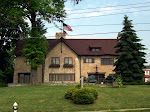
The Arms Family Museum - Celebrating 50 Years!

The Mahoning Valley Historical Society began a rise in the 1950s with an increase in budgets, collections, and property that brought about its present form. At the Annual Meeting in 1955, James L. Wick, Jr. was elected both president and treasurer of the historical society. Mr. Wick considered it a priority to obtain a permanent home for the Mahoning Valley Historical Society and its manuscript and artifact collections.
Encouraged by Grace Heath Butler, Second Vice-President, Mr. Wick talked to his distant cousin, Olive Freeman Arms Arms, about her intention to leave her home to the Mahoning Valley Historical Society. Mrs. Arms was aware of the suitability of her home to serve as a museum, and wished to entrust the preservation of both the house and her personal collection to a trustworthy institution.
 Mrs. Arms left the property at 648 Wick Avenue to the MVHS in memory of her father, Charles Dayton Arms, a founding member of the historical society, and her mother, Hannah Wick Arms. In addition to the gift of the property, its buildings, and contents, Olive Arms added to her bequest an endowment fund for “support, upkeep, maintenance, and operation.” She died in August of 1960. MVHS assumed ownership of Greystone and its contents in March of 1961.
  From the 85th Annual Meeting of the Mahoning Valley Historical Society September 12, 1960. After the meeting was called to order by President James L. Wick, Jr., he paid tribute to Mrs. Wilford P. Arms, an honorary President who passed away at 4:00 p.m. on August 25. Resolved Further, that the members of The Mahoning Valley Historical Society, individually and collectively, take this opportunity to record upon the minutes of this Society their sincere appreciation of the vision and action of Mrs. Arms in making possible the establishment and maintenance of a home for the Society wherein it can preserve its priceless collection of historical documents and other articles of educational interest relating to the history and settlement of the Mahoning Valley and thereby add to the growing cultural developments within this community. Mr. James Henderson asked for the floor and said: “Judge Ford, will you please take the chair and entertain a word which, I am sure, we all feel it would be unthinkable to leave unspoken before this meeting adjourns. We witness here today the happy culmination of all our hopes and dreams for our beloved Historical Society. Only the man himself will question the assertion that just one person, from beginning throughout, and in almost every detail, is in 99% measure responsible for this very real accomplishment. Therefore, I propose we rise to our feet and, with our hearty and affectionate plaudits, express to our own Mr. James L. Wick, Jr., however inadequately, our heartfelt gratitude and admiration.” Everyone present rose to their feet and gave Mr. Wick a rousing ovation.
 From Executive Director Bill Lawson:
The 50th anniversary of the acquisition of Greystone, Olive and Wilford Arms’ magnificent Wick Avenue residence, is a milestone in the history of the Mahoning Valley Historical Society. This event was a quantum leap for the organization because it propelled us to a new and greater level of operation that could only be hoped for previously. There have been several other quantum leaps for MVHS since then, including opening of the Archival Library, acquisition of the Business and Media Archives collection, being named a perpetual beneficiary of the Anne Kilcawley Christman Foundation and, most recently, undertaking the Campaign for the Mahoning Valley History Center. But establishing the Arms Family Museum really defined the Historical Society as an organization for the first time, and gave MVHS members, board members and staff the opportunity to foster excellence through good policies and great programs over the next three generations. This high level of function has been recognized by our professional peers through accreditation by the American Association of Museums since 1977. And thousands of individuals and families benefit from participating in our museum-based programs every year. So, Happy Anniversary, Arms Family Museum! And thank you, Olive F. A. Arms, for your great gift to our community.
Subscribe to:
Posts (Atom)